Bone Grafting for When Your Jawbone Is Too Thin or Soft for Dental Implants
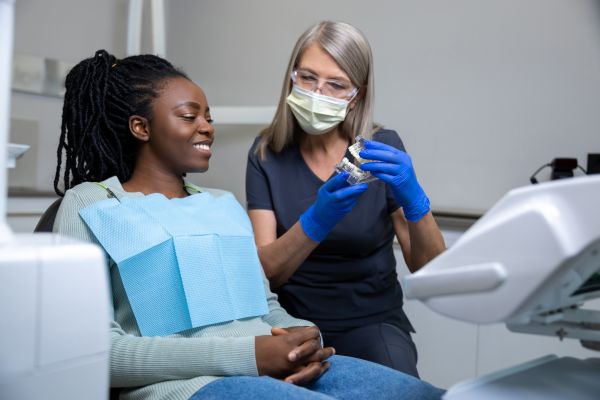
Even if a patient’s jawbone has deteriorated or is too soft to hold the post needed to secure a dental implant, implants may still be possible. Dental bone grafting can restore the jawbone to a state in which it can be primed for a dental implant. Learn more about this procedure to discover when and why patients may need it.
What are dental bone grafts?
Bone grafts in any part of the body are usually portions of bone that have been taken from one part of the body and grafted, or fused onto, another bone in a different location. If the patient’s bones are too weak, brittle, or thin even for a graft to occur, synthetic material may be used to mimic natural bone. Dental bone grafts can be sourced in the following ways:
- Autografts: This type of graft is taken from another part of the patient's body. It is most often sourced from a large bone, like the hip or femur, and it is preferable to all other types of grafts if it is available.
- Allografts: Another person, or a cadaver, may supply bone for this type of graft.
- Alloplasts: These grafts are composed of synthetic bone material such as calcium phosphate.
- Xenografts: These grafts are sourced from an animal like a cow or a pig.
Who may need a dental bone graft?
Otherwise healthy individuals who have missing teeth may be good candidates for dental bone grafts. Sometimes, especially in the case of gum disease, a patient needs a new tooth but, due to the disease, the jawbone has lost bone mass either in sections or as a whole. A soft jawbone is unable to hold the posts for implants, so patients in this position need to undergo a graft to provide a solid foundation for implanting a replacement tooth.
How is a dental bone graft completed?
During the bone grafting appointment, a portion of bone is taken from another area of the patient’s body (if the procedure involves an autograft) or it will be waiting for the patient in the dentist’s office. An incision is made in the gum line to place the new portion of the bone or synthetic bone. After placement, the patient’s gum is stitched up, and the mouth begins the healing process as the surrounding bone grows around the graft. The patient receives instructions for post-graft care and healing, which can take several months. Eventually, the jawbone is ready for the dental implant procedure.
Conclusion
The time and cost to complete a bone grafting, in the end, is well worth it. With implants, the patient is able to enjoy a boost in oral health, stronger teeth, and a renewed confidence in the resulting new smile. Patients who need implants but have been denied due to a soft jawbone or other issues should consult with a licensed dentist today to determine whether a dental bone graft is an appropriate solution.
Are you considering bone grafting in the Summit area? Get more information at https://www.summitperioimplants.com.
Check out what others are saying about our dental services on Yelp: Will I Need a Bone Graft for Dental Implants in Summit, NJ.
Related Posts
Dental implants can last for many years, but they are not immune to problems, particularly in the surrounding gum tissue. When infection develops around an implant, LAPIP laser treatment may help control the issue and, in some cases, save the implant before it needs to be removed. Early diagnosis and treatment of peri-implantitis can help…
A periodontal cleaning helps control gum disease by removing plaque and tartar from areas that brushing cannot reach. Preparing can make the visit more comfortable and help the dental team work efficiently. A general dentist may recommend this deeper cleaning when gum pockets, bleeding, or bone changes suggest periodontal disease. Read on to learn the…
Gingivitis treatment focuses on reducing plaque, controlling gum inflammation, and preventing early gum disease from progressing. Gingivitis is the earliest stage of gum disease and may cause redness, swelling, tenderness, bleeding, or persistent bad breath. Because it does not always cause pain, an evaluation with a periodontist can help identify gum changes early and create…
Selecting an effective way to replace missing teeth can be a significant decision, and dental implants often offer a dependable solution that restores both function and appearance. These specialized fixtures fuse with the jawbone to form a solid foundation for replacement teeth. However, it is important to note that not everyone automatically qualifies for this…